From research to reality: HaUI’s scientific initiatives deliver practical value
A wide range of scientific initiatives developed by lecturers at Hanoi University of Industry (HaUI) have been officially recognized by the Ministry of Industry and Trade for their effectiveness and scalability, reaffirming the University’s strong research capacity closely aligned with real-world production.
The recognition of more than 20 ministerial-level initiatives in 2025 highlights not only the academic achievements of HaUI faculty but also the University’s strategic orientation toward becoming an application-oriented and innovation-driven institution. These research efforts are designed to directly address practical challenges faced by businesses and society.
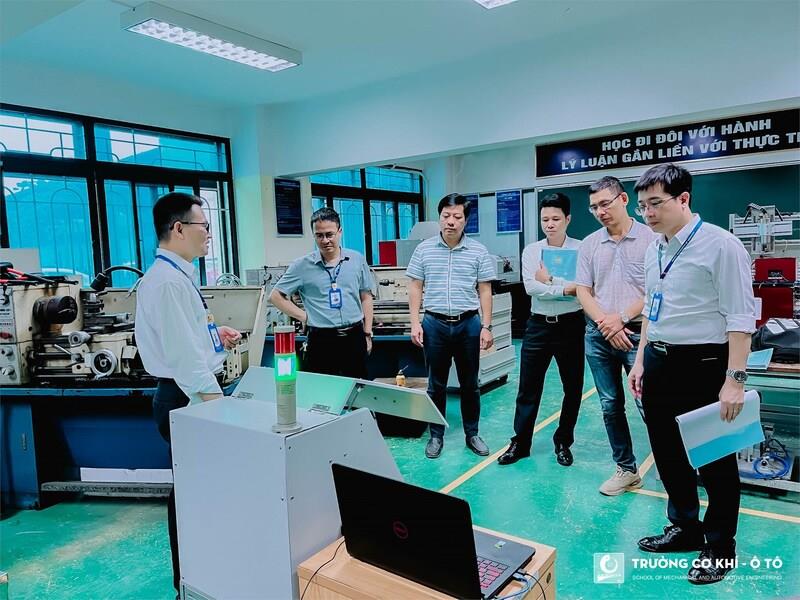
Research evaluation activities at HaUI
The Ministry’s decision to recognize the applicability and scalability of more than 20 ministerial-level initiatives in 2025 developed by HaUI lecturers is not only a testament to their scientific achievements but also a clear reflection of the University’s strategic direction toward becoming an application-oriented and innovation-driven institution. These research efforts are designed to directly engage with production processes and address specific challenges faced by enterprises and society.
A notable feature of these initiatives is their ability to generate direct economic benefits. Many projects focus on improving technological processes, optimizing production in mechanical engineering, materials, automation, and energy, which are key pillars of modern industry.
One prominent example is the initiative titled “Research on forming a titanium carbide coating on hot forging die surfaces using electrical discharge machining to enhance die performance,” led by Assoc. Prof. Dr. Pham Van Dong, Vice Rector of Hanoi University of Industry.
Based on both theoretical and experimental research, the project focuses on improving the surface quality of hot forging dies used for motorcycle sprocket components by creating a titanium carbide coating using electrical discharge machining with titanium powder mixed in an oil-based dielectric fluid. The study applies powder-mixed electrical discharge machining to increase the durability and operational efficiency of forging dies.
As a result, the research team successfully developed a forging die with a TiC-coated cavity surface using PMEDM technology, along with a complete set of technical drawings for the die manufacturing process, electrode fabrication for surface shaping, and the hot forging die system for motorcycle sprocket components.
According to the Ministry’s recognition decision, the research significantly reduces processing costs, enhances die lifespan, and saves both materials and production time. Experimental production results show that compared to conventional P18 die cavities, the lifespan of dies treated with PMEDM increased substantially, producing approximately 1,400 additional units. At the same time, labor costs, polishing materials, and productivity were optimized. With a processing cost of approximately 470 VND per product, the solution enables savings of around 700,000 VND per die core and nearly 200 million VND annually.
Assoc. Prof. Dr. Pham Van Dong noted that the research introduces a new technological process to improve the surface quality of hot forging dies. This process can be readily implemented by domestic enterprises specializing in precision mold manufacturing using available equipment and workforce at relatively low cost, ensuring competitive product pricing and strong potential for commercialization.
In the fields of environmental technology and materials, many studies are oriented toward eco-friendly solutions, including the use of bio-based materials, emission reduction, and energy efficiency. These initiatives not only help enterprises reduce costs but also contribute to meeting the growing demand for sustainable industrial development.
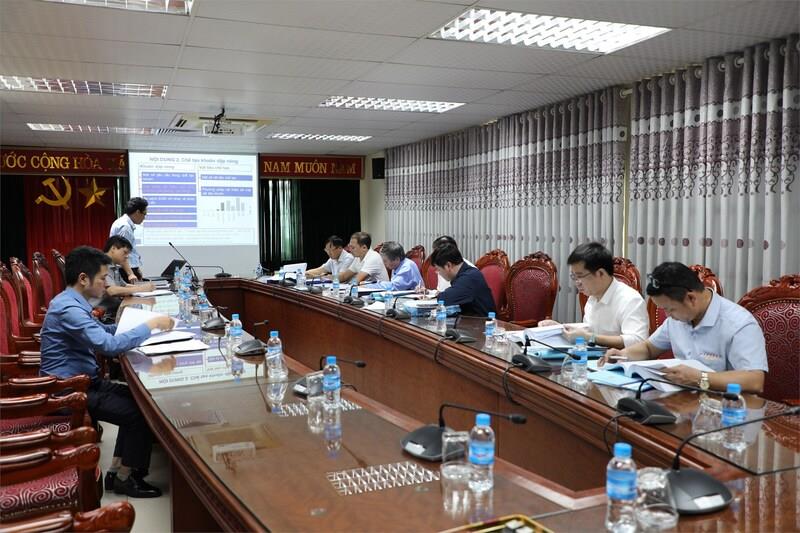
Assoc. Prof. Dr. Pham Van Dong presented the research findings to the evaluation panel
Another notable project, conducted by Dr. Nguyen Xuan Khoa, Deputy Director of the Automotive Practice and Experimentation Center, focuses on studying the frequency and intensity of knocking zones in hydrogen-fueled engines under different operating conditions using experimental methods combined with machine learning.
The application of this initiative has improved the ability to predict and control engine knocking, thereby increasing engine efficiency by approximately 3 to 5 percent while reducing the risk of engine damage caused by knocking by around 10 to 15 percent compared to conventional operating methods. By reducing repair and maintenance costs and extending engine lifespan, each hydrogen engine applying this solution can save an estimated 2,000 to 5,000 USD in operating costs over a five-year period.
From a social and environmental perspective, the solution contributes to promoting the use of clean hydrogen fuel, reducing emissions, and supporting the development of environmentally friendly transportation systems. Furthermore, it creates opportunities for applying machine learning technologies in engine research, thereby expanding research capacity and fostering high-quality human resources in the clean energy sector.
According to the author, the solution has strong practical applicability in the research, development, and operation of hydrogen-fueled engines. Engine laboratories, clean energy research centers, and hydrogen engine manufacturers can adopt this approach to optimize engine design and operating conditions. Additionally, technical education and training institutions can integrate the solution into teaching and advanced research on combustion phenomena in new-generation engines. The approach is also suitable for deployment in green transportation projects, contributing to the advancement of hydrogen as a sustainable alternative fuel.
Beyond economic efficiency, these initiatives also demonstrate significant educational value. Many research outcomes have been directly incorporated into teaching, becoming reference materials for undergraduate and postgraduate students. This creates a continuous cycle linking research, application, and education, thereby enhancing the quality of technical human resources.
Most initiatives show strong potential for replication across enterprises, educational institutions, and research centers, highlighting their broad applicability. Many have successfully moved beyond laboratory settings into actual production lines. Solutions related to process optimization, engineering simulation, and manufacturing improvements not only help enterprises reduce costs but also shorten testing time, minimize risks, and improve production accuracy. Some initiatives have enabled businesses to reduce testing costs by 20 to 40 percent or save thousands of labor hours annually.
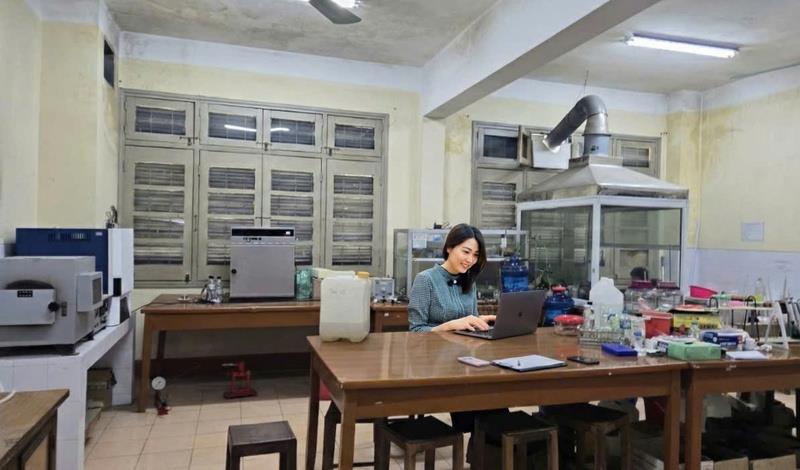
In the field of materials science and nanotechnology, research has opened up opportunities for developing new materials with high durability and environmental compatibility, in line with green industry trends. These innovations hold strong potential for application across various sectors, including precision engineering, biomedicine, energy, and aerospace.
In addition, initiatives related to governance, innovation, and startup ecosystems demonstrate HaUI’s multidimensional approach. Research is not limited to technical fields but extends to management, economics, and sustainable enterprise development. This reflects the broader role of scientific research in technical universities, not only in training engineers but also in shaping innovative thinking.
Several projects carry significant social impact, such as research on biodegradable materials, environmental treatment technologies, and solutions to improve agricultural and aquaculture productivity. These initiatives help reduce dependence on imported materials, conserve resources, and create added value for domestic industries.
The recognition by the Ministry of Industry and Trade underscores the sound strategic direction of Hanoi University of Industry in science and technology development, placing enterprises at the center and using practical application as the key measure of success.
According to Assoc. Prof. Dr. Pham Van Dong, in the context of increasingly intense industrial competition, innovation capacity is the decisive factor determining national strength. The recognized initiatives are not only achievements of the University but also make direct contributions to Vietnam’s industrial ecosystem.
Source: Báo Công thương