HaUI operationalizes its 2026-2030 strategy through a robust performance measurement framework
Turning an ambitious vision into measurable action requires more than strategic statements-it demands a rigorous monitoring framework tied to clear accountability at every level. That was the central message of the workshop titled “Multi-Level Strategic Indicators - Development Strategy of Hanoi University of Industry for 2026-2030, Vision to 2035,” held on February 3, 2026, at Hanoi University of Industry (HaUI).
The University’s strategic goal of entering the Top 400 universities in Asia by 2035 calls for precise measurement mechanisms, down to each figure, phase, and responsible unit. Chaired by Kieu Xuan Thuc, Rector of HaUI, and attended by members of the Board of Management and leaders of affiliated units, the workshop focused on translating 17 first-level strategic indicators approved under Resolution No. 97/NQ-HĐT-into concrete and operational actions.
 Workshop on Multi-Level Strategic Indicators for HaUI’s 2026–2030 Development Strategy, Vision to 2035
The proposed indicator system is built on the Balanced Scorecard model, structured around four pillars: Financial, Customer, Internal Process, and Learning & Growth. During the session, experts conducted in-depth discussions on the feasibility of 60 second-level indicators and a draft list of 212 third-level indicators designed to operationalize the strategy further.
One of the most actively debated issues concerned the implementation roadmap for the second- and third-level indicators. With more than 200 third-level indicators proposed, participants acknowledged that imposing the entire system simultaneously could place excessive pressure on the governance structure and risk overlapping responsibilities in practice. Rather than stretching resources to monitor every detailed metric from the outset, the workshop reached a consensus to officially issue the 60-second-level indicators as the primary legal and operational framework for performance measurement. The third-level indicators will serve as guiding parameters, enabling individual units to design annual and phase-specific action plans tailored to their professional domains.
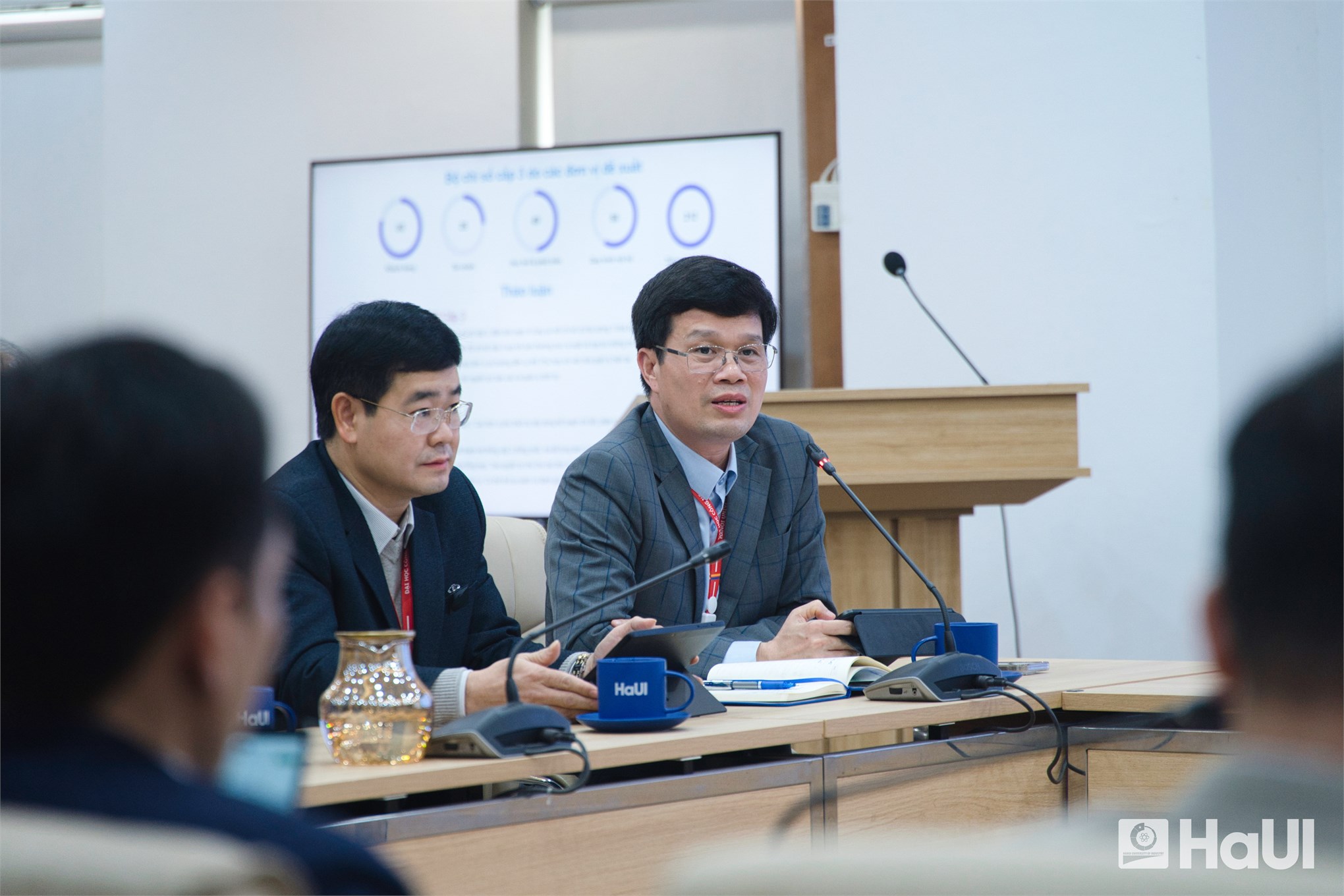
This agreement reflects a shift in governance mindset from passive monitoring to proactive implementation. Key indicators such as the proportion of faculty members holding doctoral degrees, the percentage of lecturers engaged in scientific supervision, and metrics related to innovation and digital transformation were carefully reviewed to ensure practical relevance and measurable impact.
In his concluding remarks, Rector Kieu Xuan Thuc emphasized the importance of finalizing the comprehensive set of 60 second-level indicators. This framework will serve as a foundation for HaUI’s upcoming restructuring and new operational model, ensuring that all institutional resources are aligned toward sustainable development, international integration, and the long-term strategic ambition of global competitiveness.