Innovating and enhancing the quality of teaching political science and law: A strategic mission in the digital era
As the digital era continues to exert profound influence across all spheres of society, higher education faces an urgent need to innovate in content, pedagogy, and governance. In this context, the teaching of Political Science and Law extends beyond the transmission of knowledge; it plays a pivotal role in shaping political awareness, legal consciousness, and civic responsibility among younger generations in the digital environment.
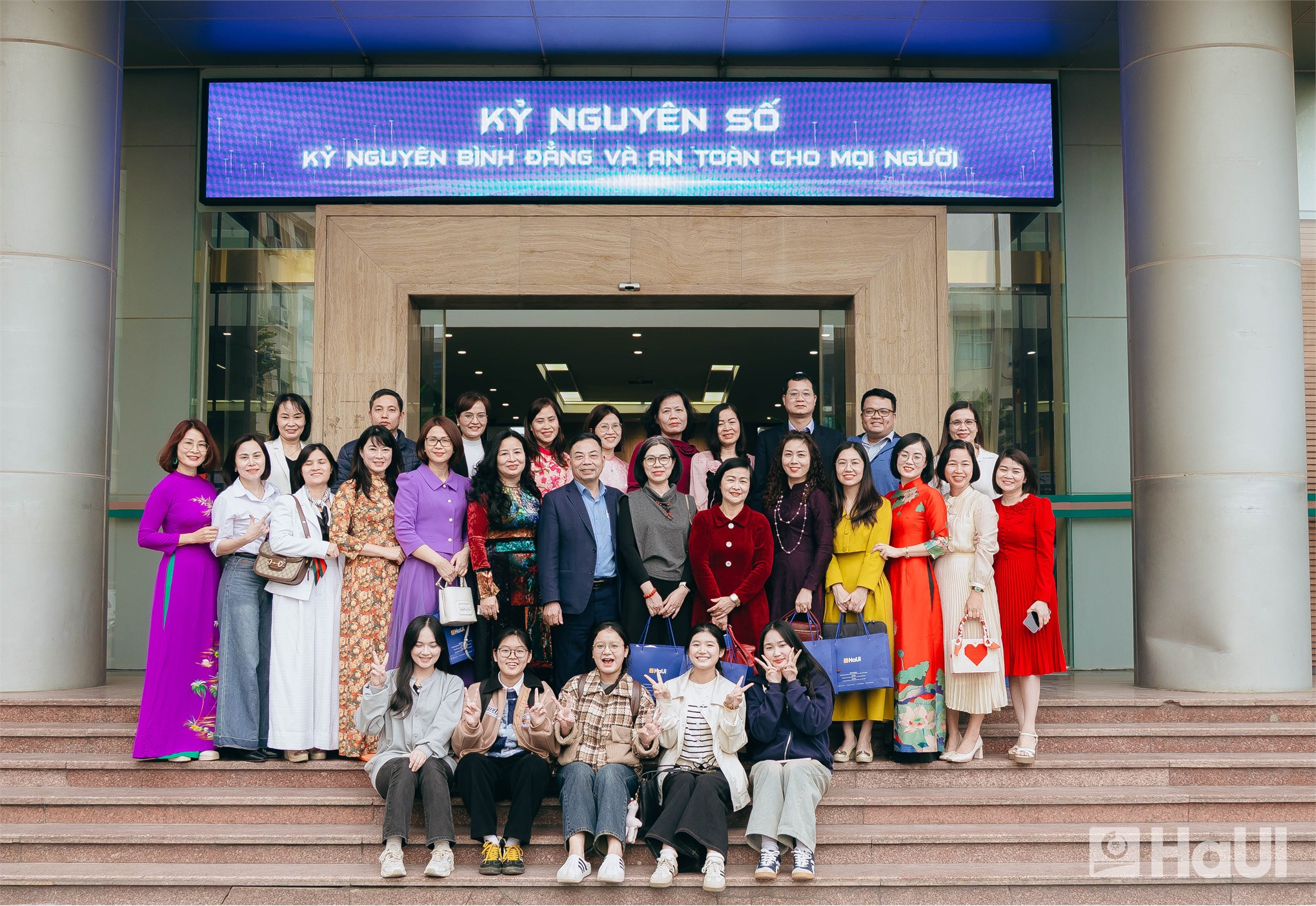
Recognizing this imperative, Hanoi University of Industry (HaUI) organized the workshop “Research and Teaching of Political Science and Law in Higher Education Institutions in the Digital Era” on the morning of December 30. The event brought together scholars, administrators, and lecturers from 27 higher education institutions nationwide to discuss both theoretical and practical issues related to Political Theory and Law education in the context of digital transformation.
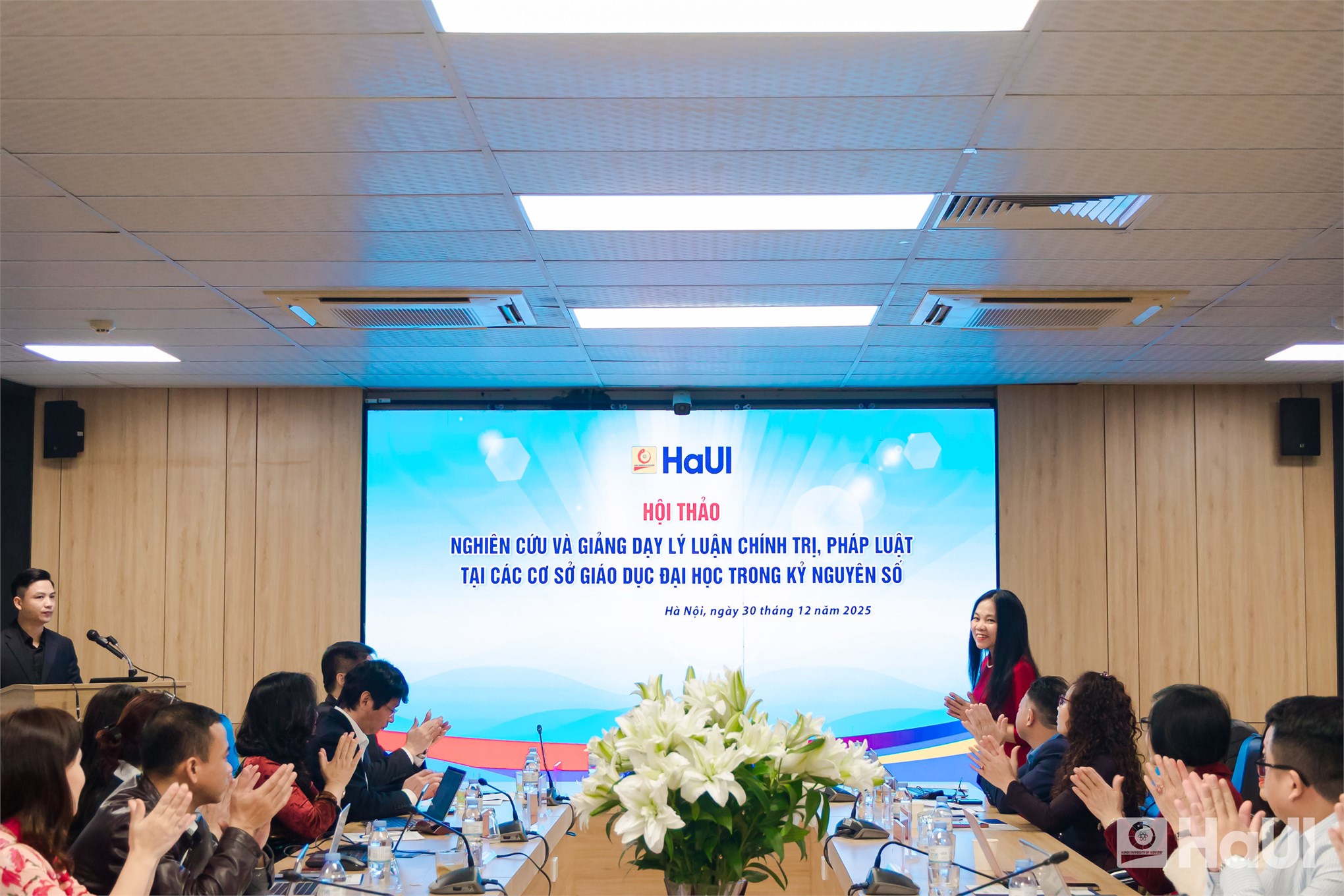 Workshop on research and teaching of political science and law in higher education institutions in the digital era
The workshop served as an open academic forum where participants shared research findings, teaching experiences, and practical solutions aimed at renewing Political Science and Law education. Featuring 56 research papers published in the conference proceedings, the event underscored the role of these disciplines in supporting Vietnam’s digital transformation while affirming their strategic importance in developing high-quality human resources with strong political foundations and independent thinking.
In his opening remarks, Assoc. Prof. Dr. Pham Van Dong, Vice Rector of Hanoi University of Industry and Head of the Organizing Committee, emphasized that the digital era is reshaping many aspects of social life, from production and governance to the ways individuals access and process information. Within this rapidly changing landscape, research and teaching in Political Theory and Law have become both urgent and long-term strategic tasks. He noted that these efforts are essential to equipping students with solid theoretical foundations, critical thinking skills, and adaptive capacities, enabling them to navigate future challenges and contribute to building a fair, civilized, and law-governed society. He also stressed the need for higher education institutions to continuously innovate teaching methods and effectively integrate digital technologies to enhance educational quality while strengthening students’ political awareness and civic competence.
 Assoc. Prof. Dr. Pham Van Dong, Vice Rector of Hanoi University of Industry, delivered the opening remarks at the workshop
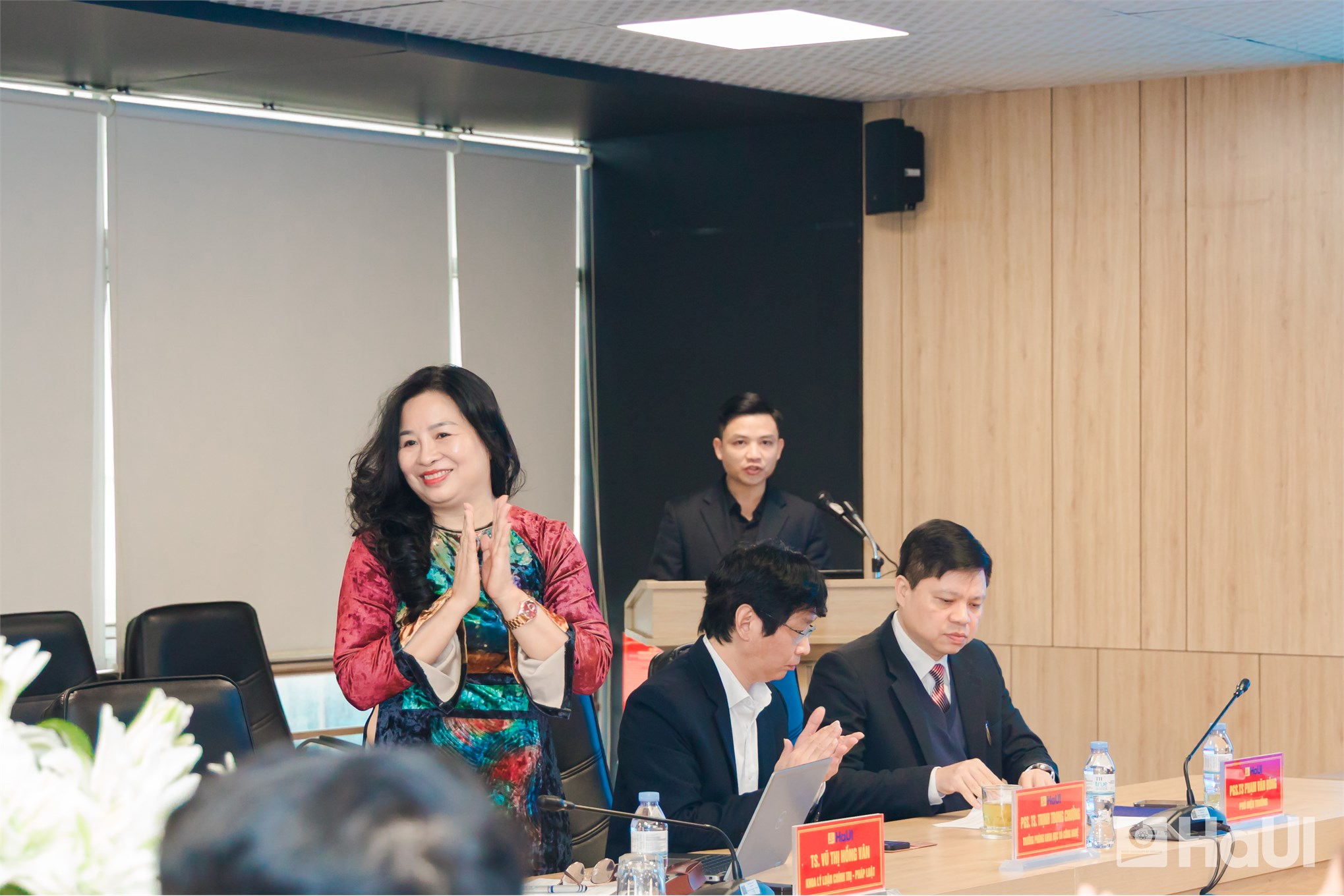 Dr. Vu Thi Hong Van, Dean of the Faculty of Political Science and Law, Hanoi University of Industry
The academic content of the workshop was presented through five selected papers addressing key issues ranging from pedagogical innovation to educational governance.
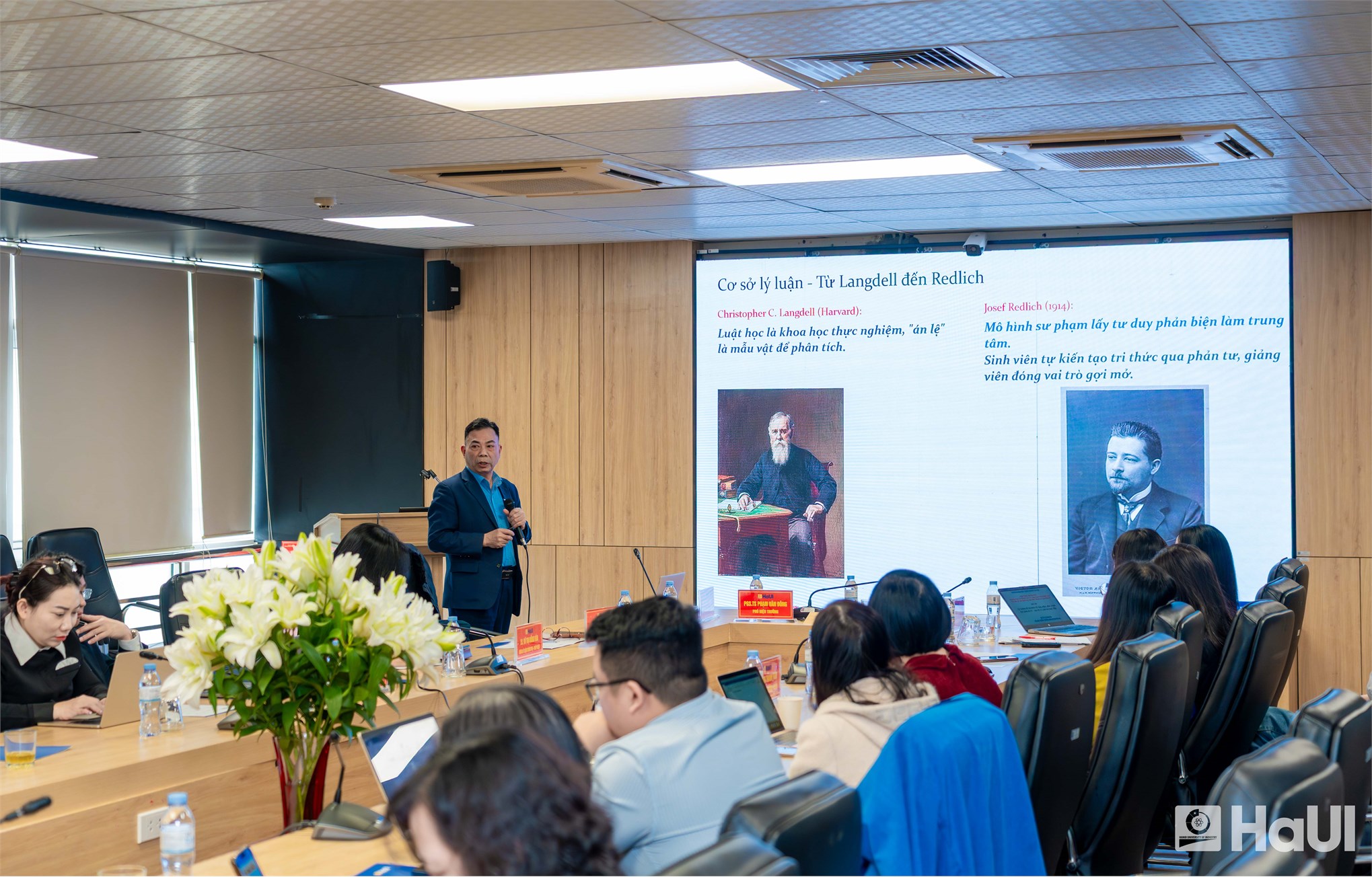 Assoc. Prof. Dr. Vu Quang from the School of Economics, Hanoi University of Science and Technology, introduced a study on the application of Josef Redlich’s Case Method in teaching General Law to non-law students in Vietnam, offering a practical approach to enhancing learner engagement and the applicability of legal knowledge.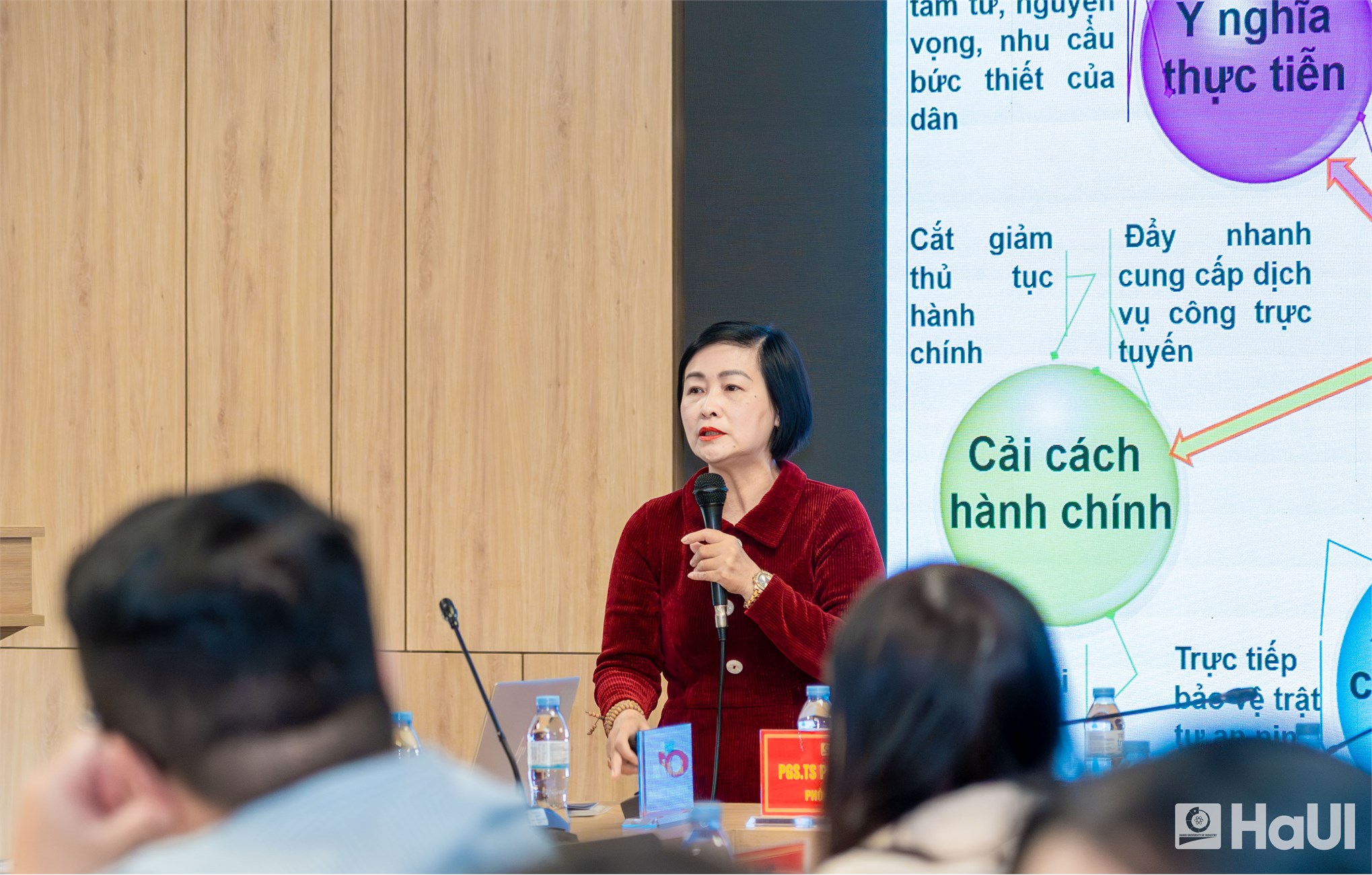
From a governance perspective, Dr. Vu Thi Hoai Phuong from Academy of Politics Region I analyzed solutions to improve the effectiveness of grassroots-level administration in better serving public needs amid digital transformation and administrative reform. This perspective highlighted the close relationship between Political Theory and Law education and real-world governance practices.
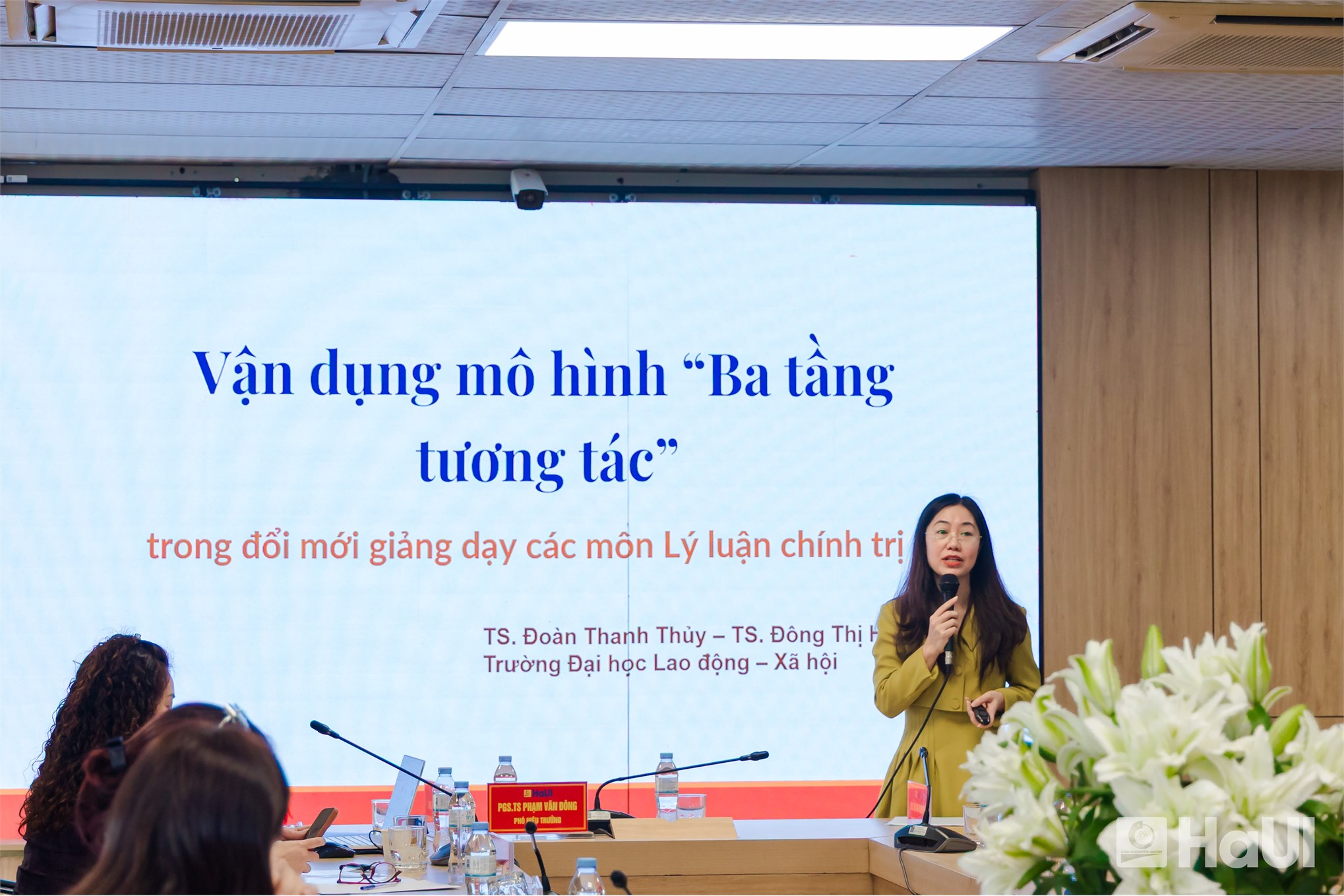
Dr. Doan Thanh Thuy from the University of Labour and Social Affairs presented a three-tier interactive model involving lecturers, students, and the living environment. This model transforms traditionally abstract theoretical subjects into dynamic learning experiences, while also strengthening students’ resilience against misinformation and harmful content on social media platforms.
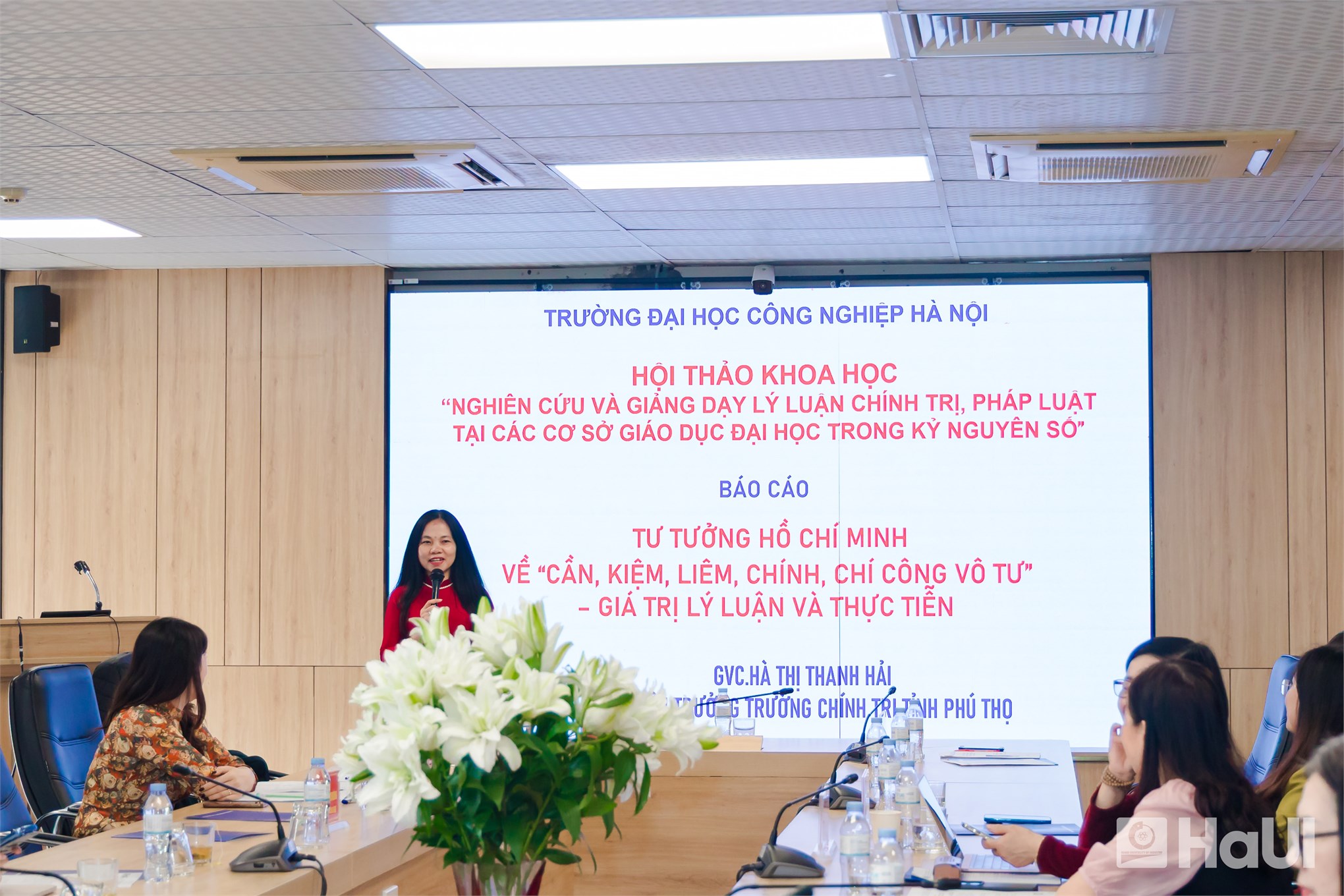 Addressing ethical values and social standards, Ms. Ha Thi Thanh Hai from Phu Tho Provincial Political School provided an in-depth analysis of the principles of diligence, thrift, integrity, and righteousness in relation to Party building and rectification, as well as contemporary standards of revolutionary ethics for cadres and Party members
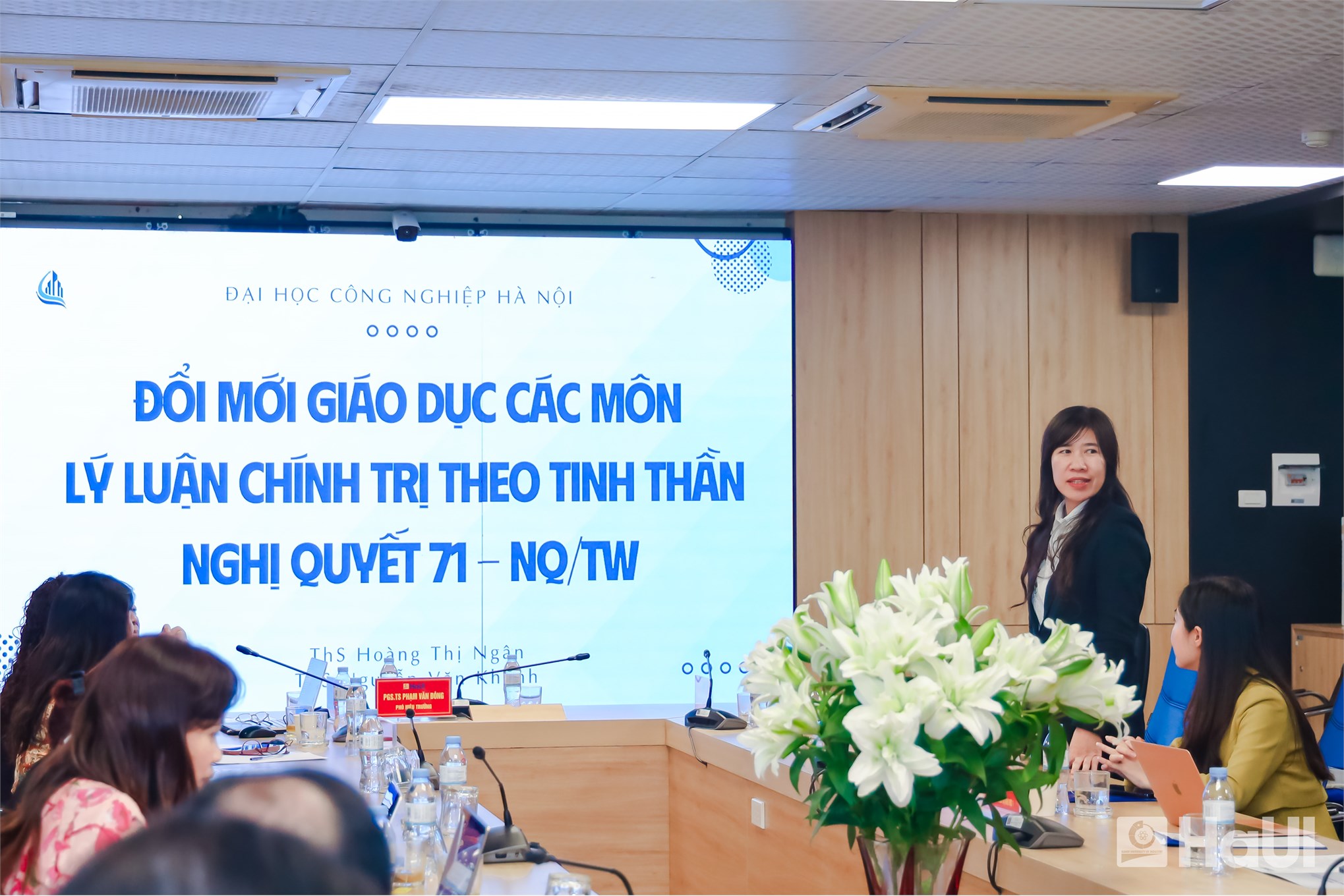 Ms. Hoang Thi Ngan, Hanoi University of Industry, clarified perspectives on open, human-centered, and creative education, emphasizing the development of learners’' qualities and competencies in line with the orientations set forth in the Politburo’s Resolution No. 71-NQ/TW.
Discussions at the workshop reached a broad consensus that strengthening collaboration between technical universities and institutions specializing in the social sciences is essential to building a comprehensive educational ecosystem that can more effectively support the teaching of Political Science and Law. This ecosystem is considered essential to the shared objective of cultivating responsible, resilient, and well-informed digital citizens capable of meeting the requirements of sustainable national development in the digital era.
-
Wednesday, 07:56 31/12/2025
Related news
Hot News
HaUI expands partnerships in Education, Research and Digital Transformation in China
Chủ Nhật, 09:09 02/08/2026

Related news
HaUI takes on hosting role for ICRMAT 2027, Expanding global research networks
Thứ Hai, 10:03 26/10/2026
HaUI strengthens international student engagement through Ambassador program
Thứ Năm, 11:34 22/10/2026
NeoTECH English Works 2026–2027 launches at HaUI, strengthening global readiness for engineering students
Thứ Ba, 07:53 06/10/2026
IT Festival - AI Horizon 2025: Where technology meets aspiration and creativity
Thứ Hai, 08:45 29/12/2025
HaUI welcomes Biel Crystal: A Strategic move for High-Tech workforce development
Thứ Tư, 09:55 24/12/2025

HaUI VEX-U ROBOTIC 2025: SMAE3 takes the crown and heads to National round in Thailand
Thứ Năm, 10:52 18/12/2025
HaUI strengthens leadership capacity for student class officers in the new development phase
Thứ Hai, 09:00 15/12/2025