HaUI students achieve scopus Q2 publication in biomedical AI research
Artificial intelligence is increasingly transforming biomedical research, creating new opportunities for collaboration across disciplines. Embracing this trend, five students from the English-taught Information Technology program at Hanoi University of Industry (HaUI) ventured beyond the traditional boundaries of computer science to investigate a biomedical challenge. Their study on deep learning for microbe–drug association prediction has been accepted for publication in Intelligence-Based Medicine, a Scopus Q2 journal.
Despite having no formal background in biology, medicine, or pharmacy, the team successfully applied deep learning techniques to predict microbe–drug associations. Their study, KAMDA: A Multi-view Kolmogorov-Arnold Network Integrating Pre-trained BERT Embeddings and Similarity-based Imputation for Microbe-Drug Association Prediction, has been accepted for publication in Intelligence-Based Medicine, a Scopus Q2 journal. The achievement highlights the growing role of interdisciplinary research, where advances in artificial intelligence increasingly contribute to solving complex challenges in healthcare and life sciences.
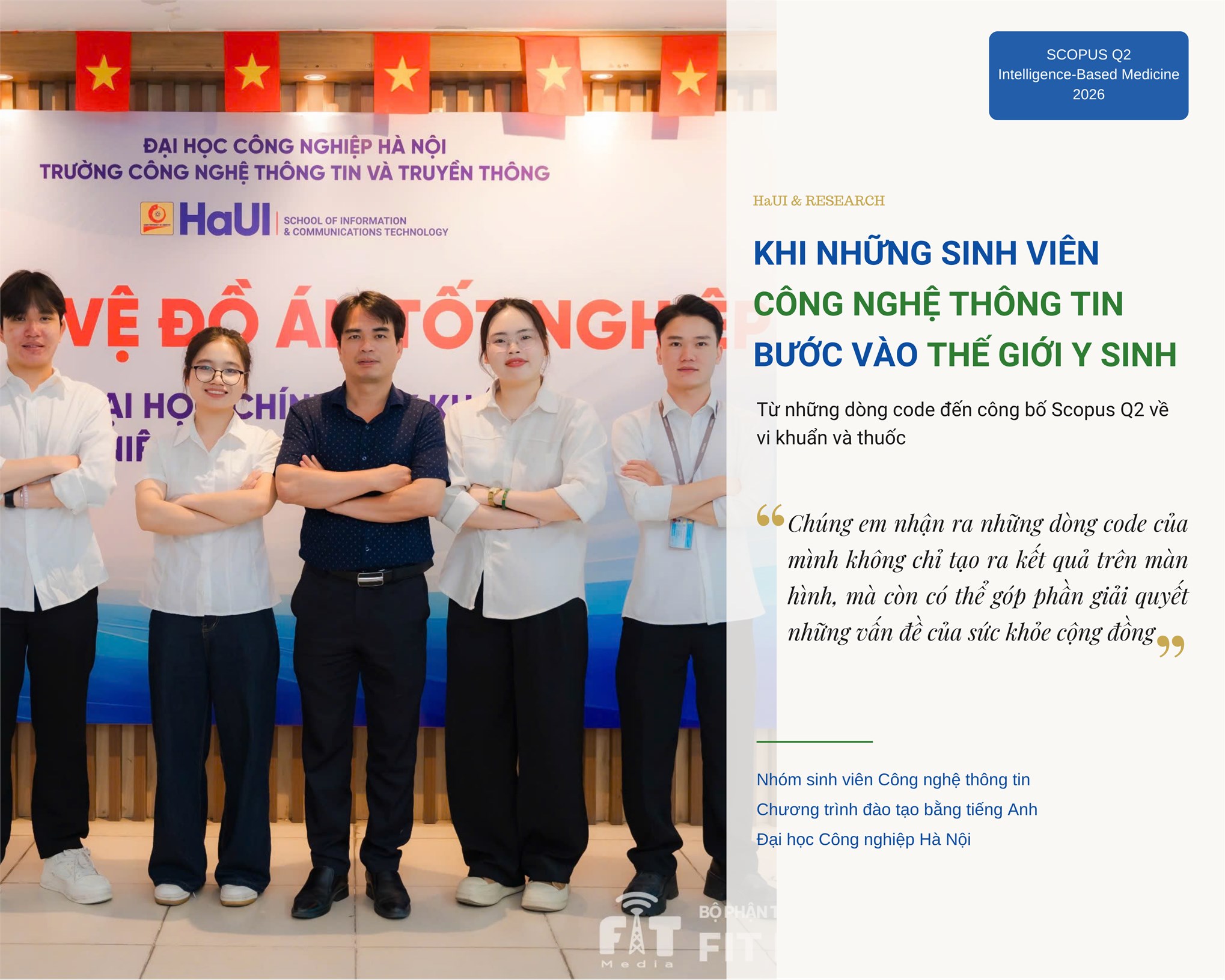
The student research team from the English-taught Information Technology program at Hanoi University of Industry poses for a photo with Dr. Nguyễn Văn Tỉnh, faculty supervisor of the project
Applying Artificial Intelligence to Biomedical Discovery
The project originated from a practical scientific challenge rather than a purely computational problem. While microorganisms play a fundamental role in human health, identifying interactions between microbes and therapeutic drugs through laboratory experiments remains both costly and time intensive. Moreover, more than 98 percent of potential microbe–drug associations have yet to be experimentally validated, leaving a vast number of promising relationships unexplored.
Recognizing this gap, the student team investigated how deep learning could support biomedical research by identifying potential associations before laboratory testing. Rather than replacing experimental studies, the proposed model is designed to help researchers prioritize the most promising candidates, improving both the efficiency and effectiveness of the discovery process.
Addressing such a challenge required knowledge far beyond conventional computer science. Alongside designing machine learning models, the students immersed themselves in molecular biology, pharmaceutical data, genomic information, and biomedical databases. Scientific literature became an indispensable part of their daily work as they learned not only unfamiliar terminology but also the research methodologies commonly adopted in biomedical science. As the project progressed, disciplinary boundaries gradually became less relevant. The research was no longer defined by computer science or biomedical science alone, but by a shared objective of solving a meaningful scientific problem.
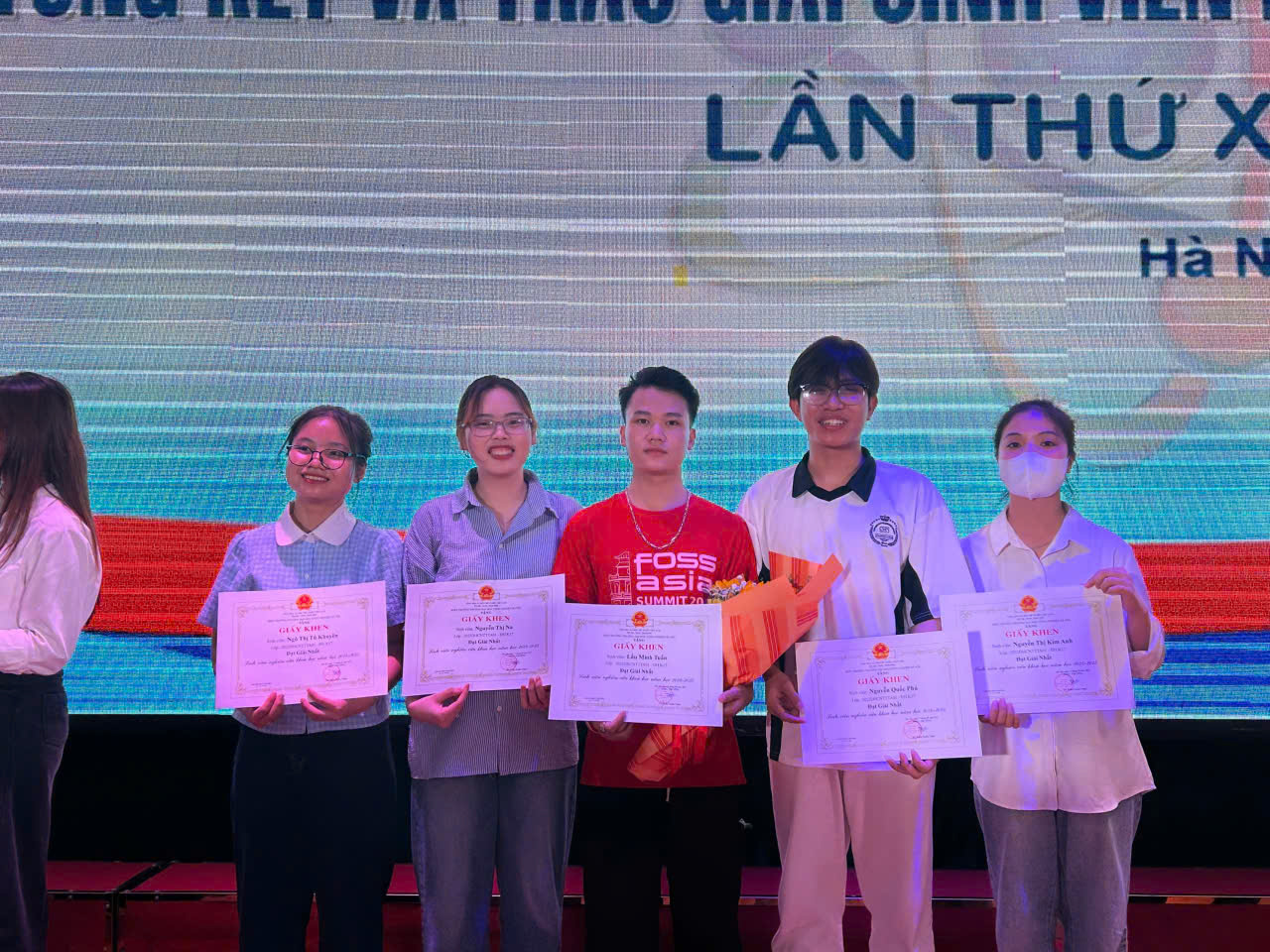
Over time, the knowledge gap between computer science and biomedical science gradually narrowed. Rather than viewing themselves through the lens of a particular discipline, the students became increasingly focused on the scientific question they were seeking to answer.
Developing Research Through Scientific Inquiry
The project was supervised by Dr. Nguyễn Văn Tỉnh, who guided the students throughout every stage of the research process, from identifying the research question to preparing the manuscript for international publication.
One principle consistently emphasized throughout the project was that high-quality research begins with extensive engagement with high-quality literature. Guided by this approach, the students devoted significant time to reviewing published studies, understanding existing methodologies, and identifying opportunities for further development.
Like many research projects, progress was rarely linear. Experimental results often required repeated refinement as hypotheses were reconsidered, datasets re-evaluated, and model architectures improved. These iterative cycles became an essential part of the learning process, strengthening not only the technical quality of the study but also the students' understanding of scientific inquiry.
International peer review provided another important stage of development. Reviewer comments challenged the team to examine every aspect of the research more critically, refine experimental evidence, and present stronger justification for their conclusions. Through this experience, the students gained a deeper appreciation that rigorous research depends not simply on producing accurate results, but on demonstrating why those results are scientifically reliable.
Creating Meaningful Impact Through Interdisciplinary Research
During the evaluation stage, the model consistently predicted associations involving clinically significant pathogens, including Acinetobacter baumannii and Stenotrophomonas maltophilia, microorganisms frequently associated with healthcare-related infections. These findings enabled the students to recognize the broader significance of their work beyond computational performance.
For the team, the research demonstrated how artificial intelligence can support biomedical discovery by accelerating the identification of promising microbe–drug interactions. Such computational approaches have the potential to reduce the time and resources required for experimental screening while providing researchers with valuable evidence for subsequent laboratory validation.
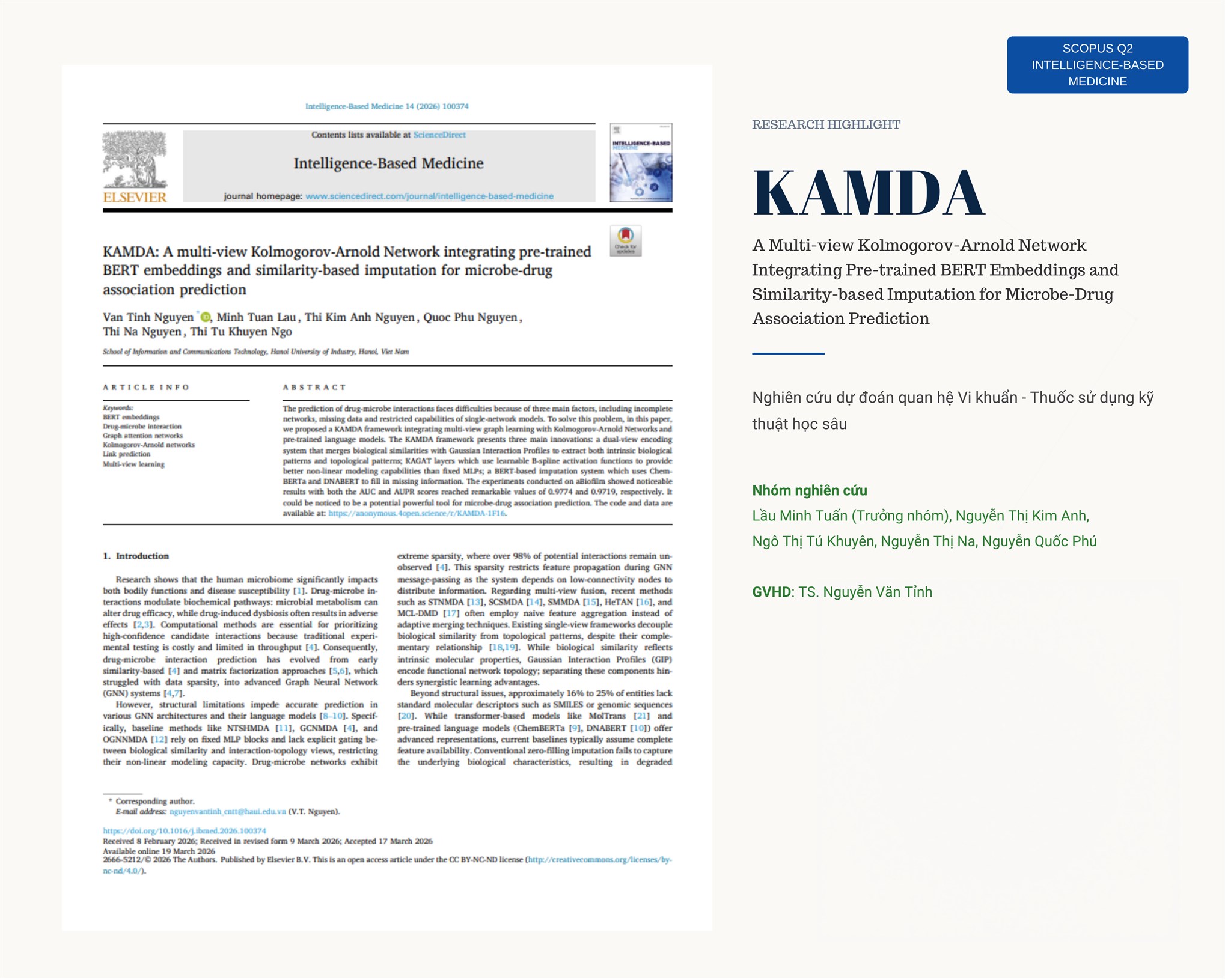
In early 2026, the research paper KAMDA: A Multi-view Kolmogorov-Arnold Network Integrating Pre-trained BERT Embeddings and Similarity-based Imputation for Microbe–Drug Association Prediction was accepted for publication in the journal Intelligence-Based Medicine.
The acceptance of the manuscript by Intelligence-Based Medicine marked the successful completion of months of literature review, model development, experimentation, manuscript revision, and international peer review. More importantly, it represented the culmination of the team's first experience conducting interdisciplinary research at an international standard.
Beyond an international publication, the project illustrates the value of intellectual curiosity and the willingness to move beyond disciplinary boundaries. By combining expertise in artificial intelligence with challenges from biomedical science, these students demonstrated how meaningful innovation often emerges at the intersection of different fields. Their achievement also reflects Hanoi University of Industry's commitment to cultivating a research-oriented learning environment that encourages interdisciplinary collaboration, supports student research, and empowers learners to contribute to the advancement of scientific knowledge.
Thứ Năm, 14:10 25/06/2026
HaUI strengthens international student engagement through Ambassador program
Thứ Năm, 11:34 22/10/2026New innovation and startup hub inaugurated at HaUI’s School of Economics
Thứ Năm, 11:38 15/10/2026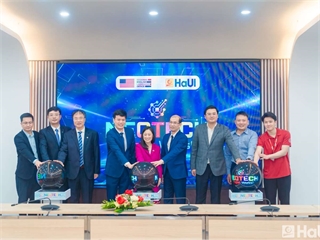
NeoTECH English Works 2026–2027 launches at HaUI, strengthening global readiness for engineering students
Thứ Ba, 07:53 06/10/2026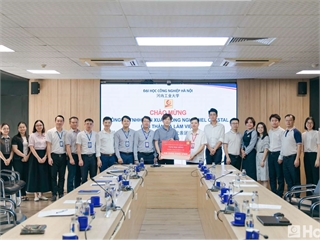
HaUI and Biel Crystal strengthen cooperation in training and high-tech human resource development
Thứ Sáu, 08:07 25/09/2026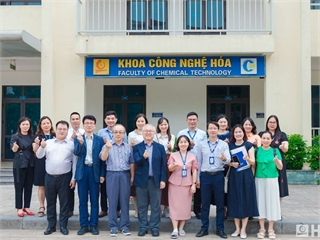
HaUI strengthens partnership with Korean Institutions to expand career opportunities
Thứ Tư, 14:31 17/06/2026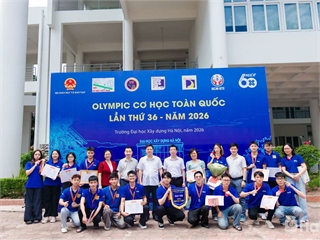
HaUI students achieve outstanding results at the 36th National Mechanics Olympiad
Thứ Tư, 16:23 10/06/2026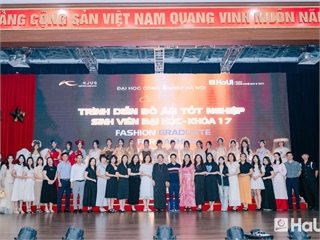
Graduation Fashion Show celebrates the creative journey of HaUI fashion students
Thứ Hai, 16:45 01/06/2026Đoàn cán bộ Học viện Phát triển Giáo dục nghề CHDCND Lào thăm và làm việc với Trường
Thứ Tư, 14:52 06/07/2022Trao Quyết định của Bộ trưởng Bộ Quốc phòng cho nam sinh viên tốt nghiệp đại học năm 2022 đi đào tạo Sỹ quan dự bị
Thứ Tư, 14:26 06/07/2022Hội nghị Khoa học: Một số xu hướng mới về đào tạo, nghiên cứu trong kỹ thuật năng lượng, điện tử và tự động hóa
Thứ Ba, 13:25 14/06/2022[LIVESTREAM] Hiểu đúng ngành, chọn đúng nghề - Tư vấn chuyên sâu nhóm ngành Điện, Điện tử
Thứ Sáu, 19:15 03/06/2022Bản quyền thuộc về Đại học Công nghiệp Hà Nội - HaUI


![[LIVESTREAM] Hiểu đúng ngành, chọn đúng nghề - Tư vấn chuyên sâu nhóm ngành Điện, Điện tử](https://www.haui.edu.vn/media/84/m84969.jpg)
![[LIVESTREAM] Hiểu đúng ngành, chọn đúng nghề - Tư vấn chuyên sâu nhóm ngành Ngôn ngữ, Văn hóa, Du lịch & Khách sạn](https://www.haui.edu.vn/media/84/m84967.jpg)